Everything I Needed to Know About Judaism, I Learned at Camp
An Op-Ed by Rabbi Jessy Dressin | June 2026 | JMore
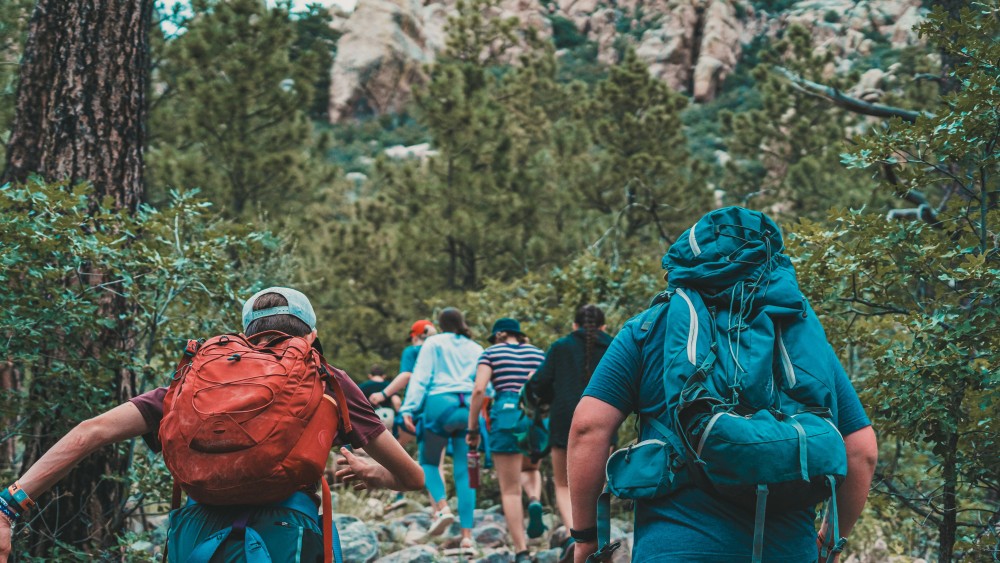
Photo by Anderson Schmig on Unsplash.com
In a few weeks, 80 rising high school sophomores will sleep over at Third Space at Shaarei Tfiloh as part of an overnight, mid-session camp trip.
In many ways, this is completely unremarkable. Jewish campers make trips like this all over the country, sleeping on synagogue floors and building friendships that will last their whole lives.
What is remarkable about this trip is that 31 years ago, I was a camper on this exact same URJ Camp Harlam trip, sleeping on a different synagogue floor, making memories with my own best friends, some of whom are parents of the campers who will be on this trip.
Summer camp laid the foundation for both the knowledge and the tools with which my Judaism is continually constructed. But even more than knowledge and tools, my 10 summers in Kunkletown, Pa., gifted me an example of a Judaism that is alive, substantive, transformational, and inspiring — most of the time dressed in clothes that needed to be washed.
No one told me the experiences I was having would fundamentally shape the way I approach the world and my identity. They just did.
On Friday nights at camp, dressed in white, I discovered the power of prayer while overlooking the sports fields and spaces that on any other day of the week would be boisterous but, in those moments, sat still.
In those mountains, I realized I wanted to live my life according to the rhythms of Jewish time. I wanted to extend the “temporary” experience of camp into something that would last beyond college graduation.
I thought I wanted to be a camp rabbi because that is where I found my Judaism. I came to realize that what I experienced at camp was bigger than the fact that it happens with young people in a certain season of life.
Camp and youth group experiences have the ingredients for true, deep, lifelong transformation, but they only happen with a rotating carousel of people who age-in and age-out of programming.
The fundamental questions of my rabbinate became, Why should we have to give up those experiences when we graduate out of our first quarter century? How can we recreate the secret sauce of camp for adults and beyond two months of the year?
Responding to these questions has shaped – and is shaping – my rabbinate, driving strategies and approaches I’ve experimented with over the last decade and a half, including what is happening at the now two-year-old Third Space at Shaarei Tfiloh.
I started by trying to define the secret sauce. What is it about camp that has the potential to form a Jewish life of meaning — a way of looking at, responding to and living in the world that is rooted in care and learning and connectivity and joy? Not just “be a good person” but the particularities of Jewish prayer, text and customs that add meaning in ways and at times I never imagined as a child.
Camp is about living Judaism. Jewish Camp is serious about its Jewish curriculum, but that curriculum is administered on the soccer field, and in the art shack, and during color war.
“ Jewish Camp is serious about its Jewish curriculum, but that curriculum is administered on the soccer field, and in the art shack, and during color war.”
When I was a camper, I didn’t sit down to learn the Birkat HaMazon, the prayer after a meal, I learned it because I sang it — loudly, joyfully, sometimes more ecstatically than the camp director liked! — after every meal, every day, every week, four weeks a summer for 10 summers (and then a couple more at other camps similar to Camp Harlam in other locations).
I also learned real Torah lessons at camp. Lessons about how to show up when my community needs me — when someone is homesick or has their first heartbreak, or upon learning that a loved one has died when they are far away from their family.
I learned to volunteer to do something that needed to be done and the importance of taking turns so that everyone shared responsibility for the community and experiences we desired to have.
Those lessons stuck. The people with whom I went to camp danced at my wedding and showed up for shiva when I experienced loss – and I have done the same for them.
Camp Judaism doesn’t live only in the mind, and it doesn’t require a specific building in order to exist. Instead, camp becomes a container for a giant experiment, one that imagines the world not as it is but as it could be. One where what is built there follows its participants out of the container.
Camp Judaism extends beyond the camp gates and can be recognized when meeting someone who also carries with them the language, stories, customs and values that were gained there.
My dream for Third Space is to be the kind of container – like camp – from which the fullness of Jewish identity, learning, community and hope can overflow. At Third Space, as at camp, life is the curriculum. It is a place where you encounter lessons as they emerge from within you – not as someone hands them to you, but as you experience and embody them. A place where you sit with another person, considering a timeless text from Jewish tradition, exchanging interpretations and applying them to the life you aspire to live. A place where you engage in ritual in community and feel the power of demarcating something sacred from what is otherwise regular. A place where you create art and are reminded that being created in the image of the Divine means that as G!d created, so do we.
In what feels like a coming home moment for me, when the 80 Camp Harlam kids wake up at Third Space, I’ll be there to serve them bagels. I’ll tell them that I did this same trip 31 years ago and thank them for bringing camp to me. And my hope is that I will then shine back to them what it can look like to bring the lessons of camp down from the mountain – to continue to live and love Judaism.
And maybe, when these kids reach adulthood, they’ll remember Third Space and know something is waiting to welcome them when the camp years have come to a close but the desire for communal, joyful, embodied, and inquisitive Judaism, G!d willing, remains.
Read the op-ed in JMore